








AUTORADARS.LV

Car fault codes explained

Find out what your car's fault code means, what the possible causes are and what to check. Simple, clear and in one place.

Examples: P0299 P0420 P0171 P0401

43 000+ fault codesOBD-II and maker codes
Explanations and fixes9 532 codes with causes or fixes
For many makes21 maker code sections

Choose a make

Code groups

Most searched codes

See all fault codes
17515 P1107 Bank 2 Sensor 1, electrical heating circuit: short to positive; Bank2-Probe1, heating circuit short circuit to positive 17518 P1110 Bank 2 Sensor 2, electrical heating circuit: short to positive; Bank2-Probe2, heating circuit short circuit to positive 17517 P1109 Bank 2 Sensor 2: Voltage Too Low / Leakage; Bank2-Probe2 voltage too low / air leakage 16500 P0116 Coolant Temperature Sensor-G62: implausible signal; Coolant temperature sender G62 implausible signal 17519 P1111 Lambda control (Row 1): depletion of the mixture in the system; Lambda control (bank 1) system too lean 16502 P0118 Coolant Temperature Sensor-G62 Signal Too High; Coolant temperature sender G62 signal too high 16496 P0112 Intake Air Temperature Sensor-G42: Signal Too Low; Intake air temperature sender G42 signal too small 17516 P1108 Bank 2 Sensor 1, heating circuit: power too low; Bank2-Probe1, heating circuit power too low 16554 P0170 Row 1: malfunction of the fuel-air mixture determination system; Bank1, fuel metering system malfunction 17174 P0790 Program switch-E122: a failure in the electrical circuit; Program switch-E122 electrical fault in the circuit 16497 P0113 Intake Air Temperature Sensor-G42: Signal Too High; Intake air temperature sender G42 signal too high 18271 P1863 Drive data bus: no messages from the steering angle sensor; Data bus drive missing message from the steering angle sender 18266 P1858 Speed ​​signal from engine control unit: error message from engine control unit; Speed ​​signal from the engine control unit Error message from the engine control unit 18265 P1857 Load signal: error message from the engine control unit; Load signal error message from the engine control unit 17537 P1129 Row 2, adaptation of the mixture (under load): re-enrichment of the mixture in the system; Bank2, mixture adaptation (mult.) System too rich 17532 P1124 Row 2, mixture adaptation, air (add.): Depletion of the mixture in the system; Bank1, mixture adaptation air (add.) System too lean 16544 P0160 Row 2 probe 2: no activity; Bank2-Probe2 no activity 16542 P0158 Bank 2 Sensor 2: Voltage Too High; Bank2-Probe2 voltage too high 17513 P1105 Bank 1 Sensor 2, Heating circuit: short to positive; Bank1-Probe2, heating circuit short circuit to positive 16555 P0171 Row 1, fuel-air mixture determination system: mixture too lean; Bank1, fuel metering system too lean 18264 P1856 Throttle potentiometer-G69: error message from the engine control unit; Throttle valve potentiometer-G69 Error message from engine control unit

How to read a fault code?

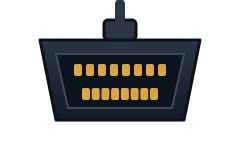
Fault codes are read with an OBD-II diagnostic tool plugged into the car's diagnostic socket. Most passenger cars have one (petrol cars in the EU from 2001, diesels from 2004).

  1. 1Plug in an OBD-II diagnostic tool
  2. 2Read the fault codes from the control unit
  3. 3Look up the code here to see its meaning, possible causes and what to check

Where to find the OBD-II socket

  • Under the steering column, driver's side
  • Under the dashboard by the driver's feet
  • In the centre console or behind a cover

Good to know

A fault code points to where the problem is, not to one certain cause. To find the problem exactly, more diagnostics may be needed: check several parameters and see a specialist if needed.

Frequently asked questions

What is an OBD-II fault code?

A five-character code the control unit stores when a value is out of range. The first letter is the system: P powertrain, B body, C chassis, U network.

What if there are several fault codes?

Start with the first or most serious code. One problem often causes several codes, for example a sensor fault can also cause misfire codes.

Do all cars use the same codes?

Standard codes (P0, P2, U0, B0, C0) mean the same for all makes. Maker codes (P1, part of P3 and makers' numbers) can mean different things for each make.

Can one code mean different things?

A maker code can mean different things for different makes. That is why maker codes are shown with the make.

Can I clear a fault code myself?

Yes, with a diagnostic tool, but that does not fix the problem. If the cause stays, the code comes back. Write the code down before clearing it.

Is the fault code enough to know what to repair?

No. The code shows which system and circuit is out of range, but the faulty part is found by checking: wiring, connectors, sensors and mechanics.

Maker code meanings may differ. The information is general and does not replace professional diagnostics.

Report

What happened?

We will send the confirmation and our answer there.